
I. After Nightfall
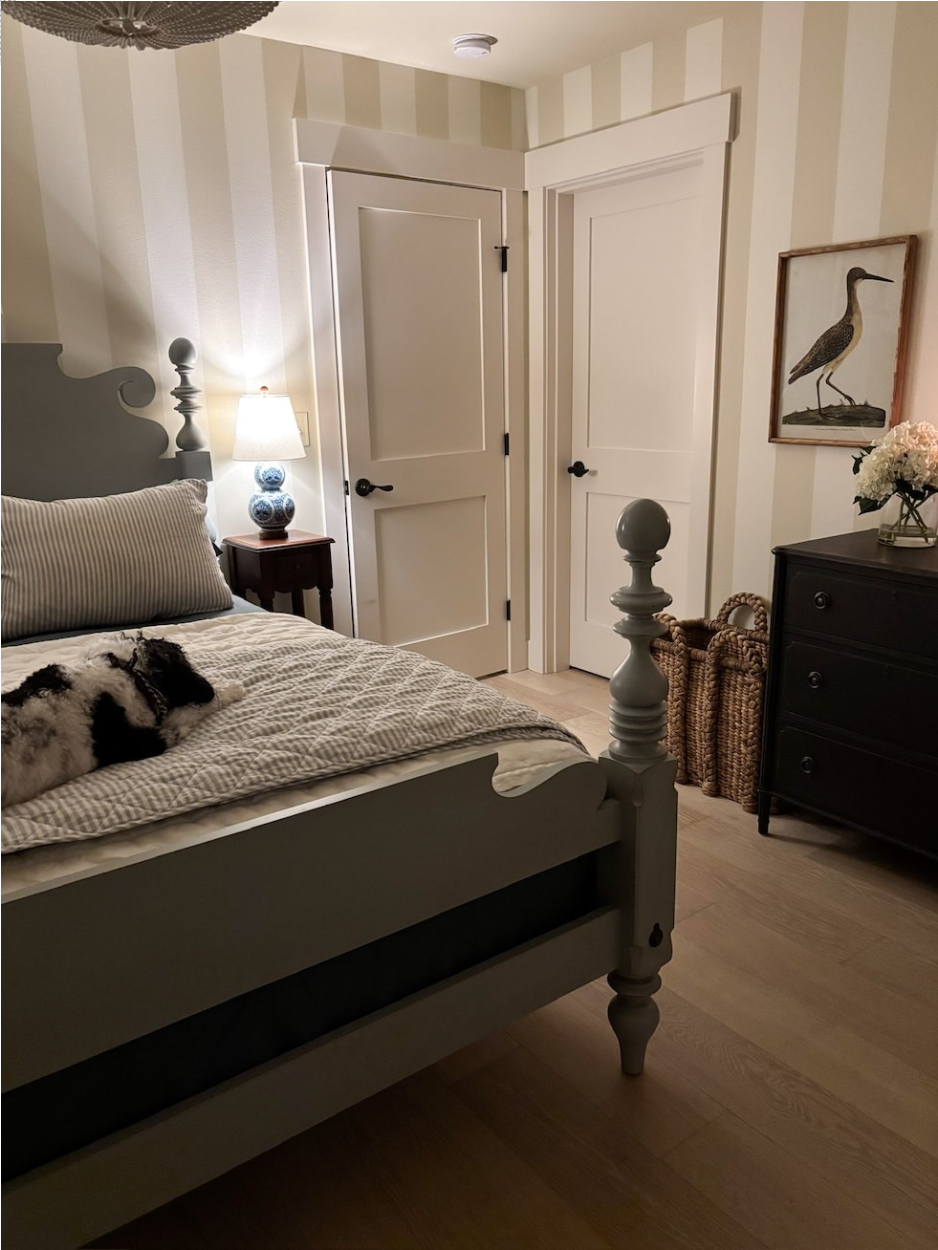
At seven o’clock in the evening, the bedroom begins to reveal its true character. The daytime light is too generous, illuminating everything unremarkable; only when twilight seeps in through the cracks in the window does the vertical stripes on the walls slowly awaken, like elongated shadows, layers of pale brown overlaid with ivory white, whispering in the corners.
My husband and I stand in the doorway, looking at the room. There are still some finishing touches—the paint on the baseboards, the screws on the curtain rod—but that doesn’t stop us from recognizing it. This is what we wanted: to feel like an old sweater against our skin at night, yet willing to open the door to welcome the sunlight during the day. Two temperaments, one room.
Most of the furniture is old acquaintance. The four-poster bed has been with us for fifteen years, and the wicker basket has been in the same spot in our previous house. What truly changes the atmosphere are two cans of paint and a new pair of curtains.
II. The First Lesson of Color: Learning to Speak in Soft Silence
If you want a bedroom to quiet down, first teach its walls to speak softly.
I chose vertical stripes of cream and light brown—not an aggressive contrast, but more like yellowed pages stacked together in an old photo album. The advantage of soft tones is that they don’t overpower, they simply support. Even if you later hang a print of seabirds or lay out indigo sheets, the walls will still firmly support these bolder patterns, preventing the room from feeling unbalanced.
Color is the breath of a room. Too light and it feels airy; too dark and it feels suffocating. Finding that perfect shade of gray is like finding the right volume for a lullaby.
III. The Rhetoric of the Bed: Layers of Invitation
A bed should look like it’s always welcoming you to collapse into it.
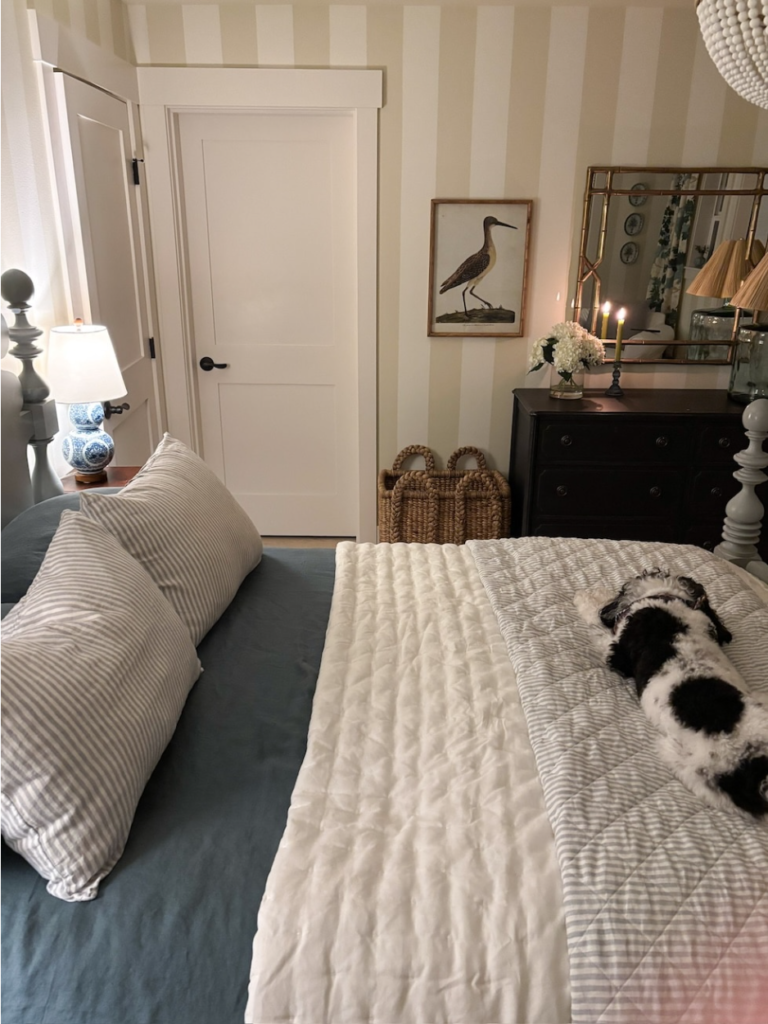
I laid out a linen sheet, a deep, ocean-like gray-blue; on top lay a striped quilted comforter, a mix of misty white and light gray; then I tossed in two fluffy long pillows, like two over-fermented loaves of bread. On top of that was a plain white thin blanket, easily lifted and slipped under—this seemingly effortless mess actually required a bit of planning.
Texture is a tactile oracle. When you pass by the bedroom during the day, a glance at the quilted diamond patterns, the wrinkles of the linen, the frayed edges of the pillows, and your fingers will anticipate the feel of the night. The bed is no longer just furniture; it becomes a verb: lie down, curl up, sink.
IV. A Life Hidden Away
The bedroom shouldn’t be the final destination for clutter.
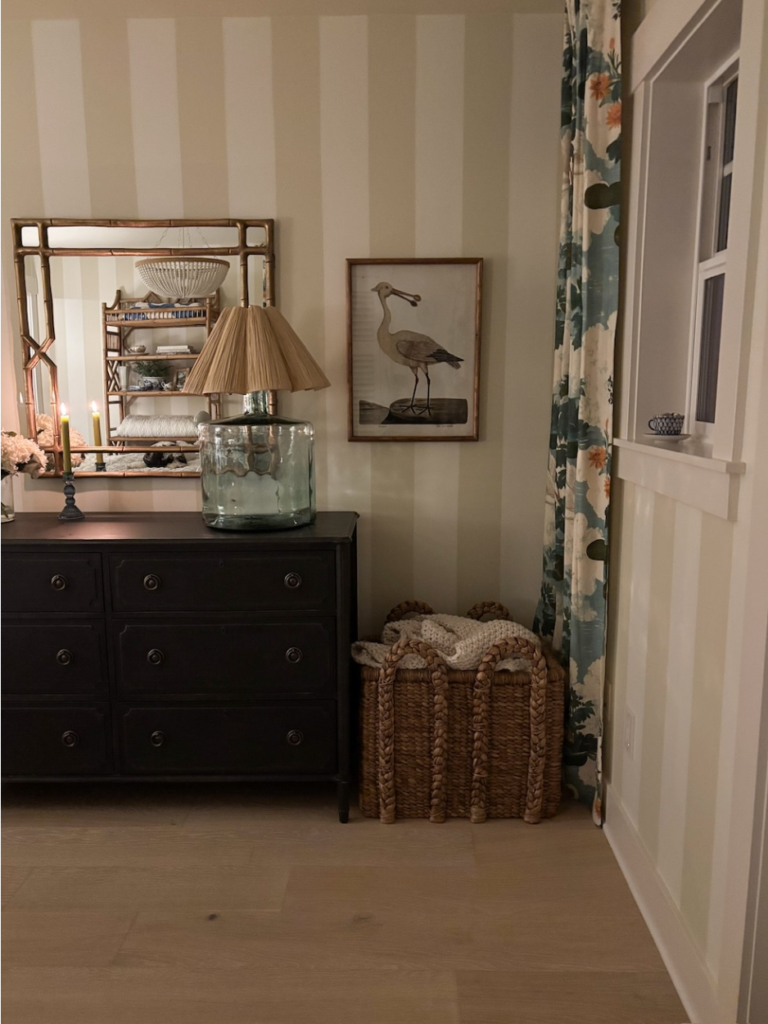
I placed two wicker baskets next to the dresser, enough to hold scattered magazines, unopened delivery boxes, and that wool sock whose other half I can never find. Skincare bottles and jars are hidden in the drawers, and shirts to be ironed tomorrow hang behind the wardrobe door. When the surface is empty, the eyes have a place to rest.
Clutter is a kind of noise. Not “mess” in a moral sense, but a visual chatter. Gather things into the gaps in the fabric, the drawers in the wood, the depths of the basket—give the room a chance to fall silent.
V. The Ritual of Light: Three Props of Twilight
After the sun sets, I light the blue-and-white porcelain lamp by my bedside. Light leaks from the edge of the cloth shade, drawing a blurry circle on the wall, like a slowly blinking eye.
The candle on the dresser is the second step. I prefer beeswax; it burns without a smell, only a small cluster of flame dancing in the glass jar. The third step is a vase of hydrangeas, cut from the yard during the day, now fading to grayish-white in the twilight, like a cloud washed by moonlight.
These three things—a lamp, a candle, a vase of flowers—form the triangular measurement of twilight. They transform the room from a “functional space” into a “resting place.”
VI. The Morning Pact: Making the Bed as the First Act of Honesty
I make my bed every morning. Not with a military-style sleekness, just pulling the comforter up, fluffing the pillows, and folding the quilt in half at the foot of the bed. Thirty seconds.
The magic of this action lies in its promise to myself: I will be back today. Whatever happened during the day—a leaky faucet, unanswered emails, supermarket lines—this made-up bed awaits me at three in the afternoon. It’s an anchor, tethering me to the drifting days.
Making the bed is also the first step towards order in a room. When the bed is tidy, the dust on the floor doesn’t seem so intrusive, and water stains on the dresser are easier to wipe away. The atmosphere of a bedroom often begins with the bed.
VII. Tranquility is a Practice
Ultimately, a tranquil bedroom isn’t something you buy. You can have the most expensive linen and the softest light bulbs, but if you bring your phone to bed at night, if the basket is always empty while the chair is always piled high with clothes, if you’re rushing in the morning and don’t even have time to straighten the blankets—the room is merely quiet, not tranquil.
Tranquility is a practice. Like breathing, it needs to be repeated every day until it becomes a bodily memory.
Now, the blue-and-white porcelain lamp is still lit. The dog is curled up at the foot of the bed like a furry comma. My husband is turning pages in the next room, the pages rustling. The striped walls embrace it all, silent, simply present.
That’s enough.