
I. I Don’t Call Myself a Collector
The word is too heavy. A collector implies systems, catalogs, numbered labels in glass cases. I just linger for a second longer when browsing—on the marks of handcraft, on the imperfections that mass production can’t replicate.
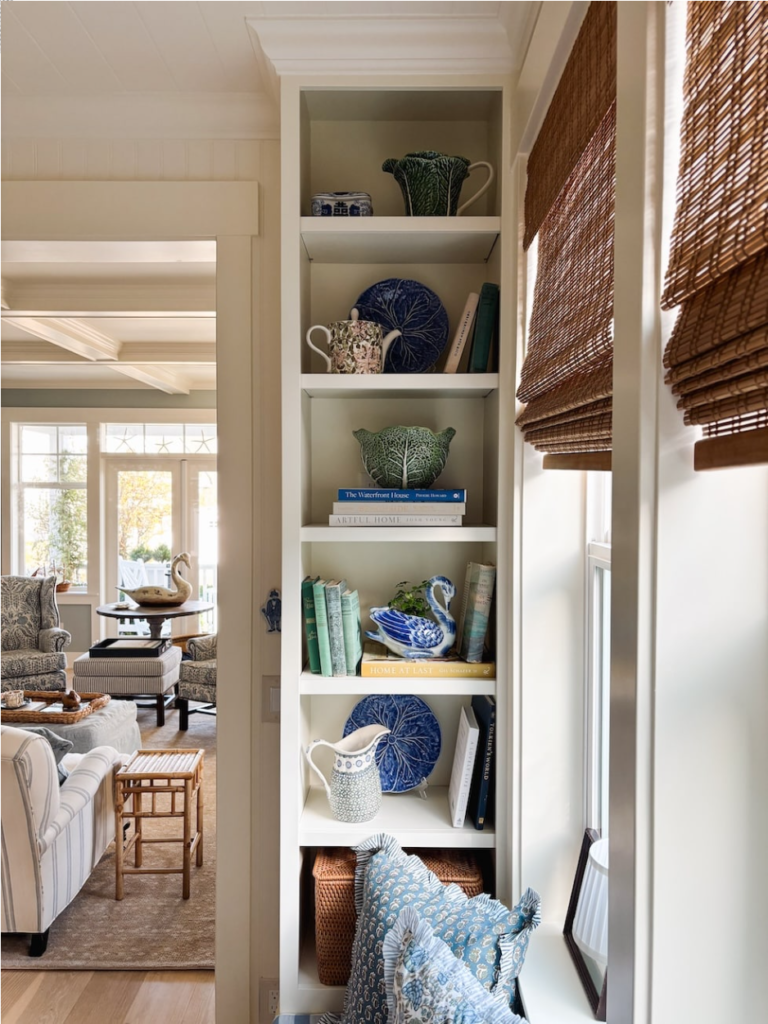
On my bookshelf sits a blue and white ceramic swan. Originally a planter, it has an oval opening on its back. Now it sits empty, perched beside a row of green-covered old books, a non-existent feather in its beak. I didn’t hesitate when I retrieved it from a small Etsy shop. Some things don’t need proof; they just need to be seen.
II. The Unexpectedness of Physical Stores
People ask me where these odds and ends come from. I usually answer: I first stumbled upon them in a local secondhand store, and then went online.
The advantage of physical stores lies in the unexpected. You can’t predict what’s around the corner—maybe an anchor-shaped brass doorbell, or a sailboat embroidery framed in faded gold. You have to be there, you have to bend down, you have to endure the dust and the occasional pungent smell of camphor. In exchange, you gain the act of “discovery” itself, not just the object.
Online shopping is a different logic. You know what you’re looking for, and the algorithm knows it too. But supporting small, independent shops somewhat offsets the tedium of “precision.” I leave messages for those shop owners, and they reply quickly; packages often include handwritten thank yous.
III. The Principle of Mobility
I have a hard and fast rule: any decorative item entering this home must be able to stand in at least three places.
That swan can perch on the bookshelf, sit on the console table in the entryway, or be placed on the windowsill in the bathroom—it’s never picky about the background, as long as the lighting is right. A hand-painted ceramic cup, depicting a wooden barrel and vines, is now a pen holder; in winter it might become a candlestick, and in spring perhaps a sprig of forsythia.
Furniture is fixed in one place; decoration is what can move. A house needs this fluidity, otherwise it will stagnate.
IV. Recent Acquisitions
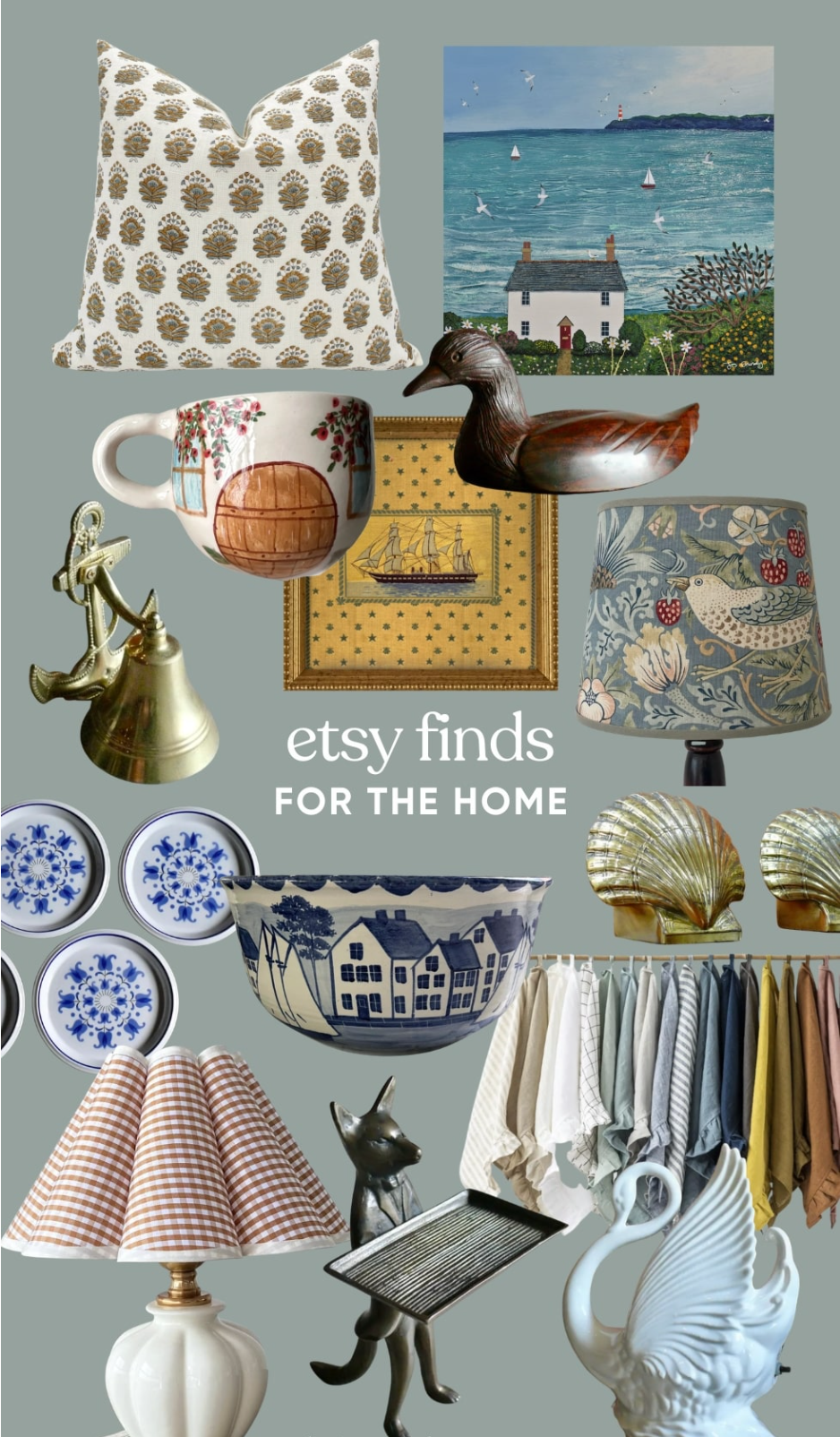
Checkered Linen Lampshade. A fine brown and white checkered pattern sits atop a milky-white ceramic base. When the light is on, the shadow of the checkered pattern is cast on the wall, like the breathing of some ancient fabric texture.
Seaside Cottage Painting. A white house, a red door, a lighthouse and triangular sails in the distance. The artist’s signature is in the lower right corner, almost completely covered by paint. I hung it at the end of the corridor, and every time I glance at it, it’s like receiving a postcard from a strange shore.
Strawberry Thief Pattern Lampshade. A pattern by William Morris, with a bird’s beak carrying berries on a gray-blue background. It doesn’t belong to the aesthetics of this era, and therefore won’t be tired of it.
Cast Iron Fox Tray. A standing fox, its front paws holding a rectangular cast iron tray. I placed it on the kitchen island to hold lemons and garlic cloves. It looked too serious, almost comically so.
A large bowl with a blue and white village pattern. The bowl’s rim was painted with rows of tiny houses, chimneys belching nonexistent smoke. I used it to hold apples, or sometimes nothing at all, just to occupy the center of the dining table.
V. On the Feeling of “Collecting”
The worst thing for a home is to “buy everything at once.” That showroom-like completeness kills the feeling of living there.
I like to make a room feel like it has slowly settled out of time—this basket is from the last decade, that painting is an impulse from a summer, the swan is a new addition last month. They don’t share a common theme, only a common patience: waiting to be seen, waiting to be moved, waiting to be reinterpreted.
The essence of collecting is not possession, but narration. Every old object is an unfinished sentence; you place it somewhere, and then wait for it to continue.
At the bottom of my bookshelf are two wicker baskets, stuffed with spare cushions and expired magazines. On the top shelf was that dark green cabbage-patterned water jug—it had never held any water. In the middle, a blue and white plate leaned against the spine of the book, seemingly casually placed there, though it hadn’t been moved for three years.
This was the order I wanted: seemingly random, yet stubbornly persistent. Like a sentence that had been repeatedly edited, ultimately appearing unadorned.
The swan statue remained empty. I tried planting succulents in it, tried inserting a dried branch, but eventually gave up. Perhaps it never needed to be filled. Some containers exist solely to remain empty.