
I. My Obsession with Open Shelves
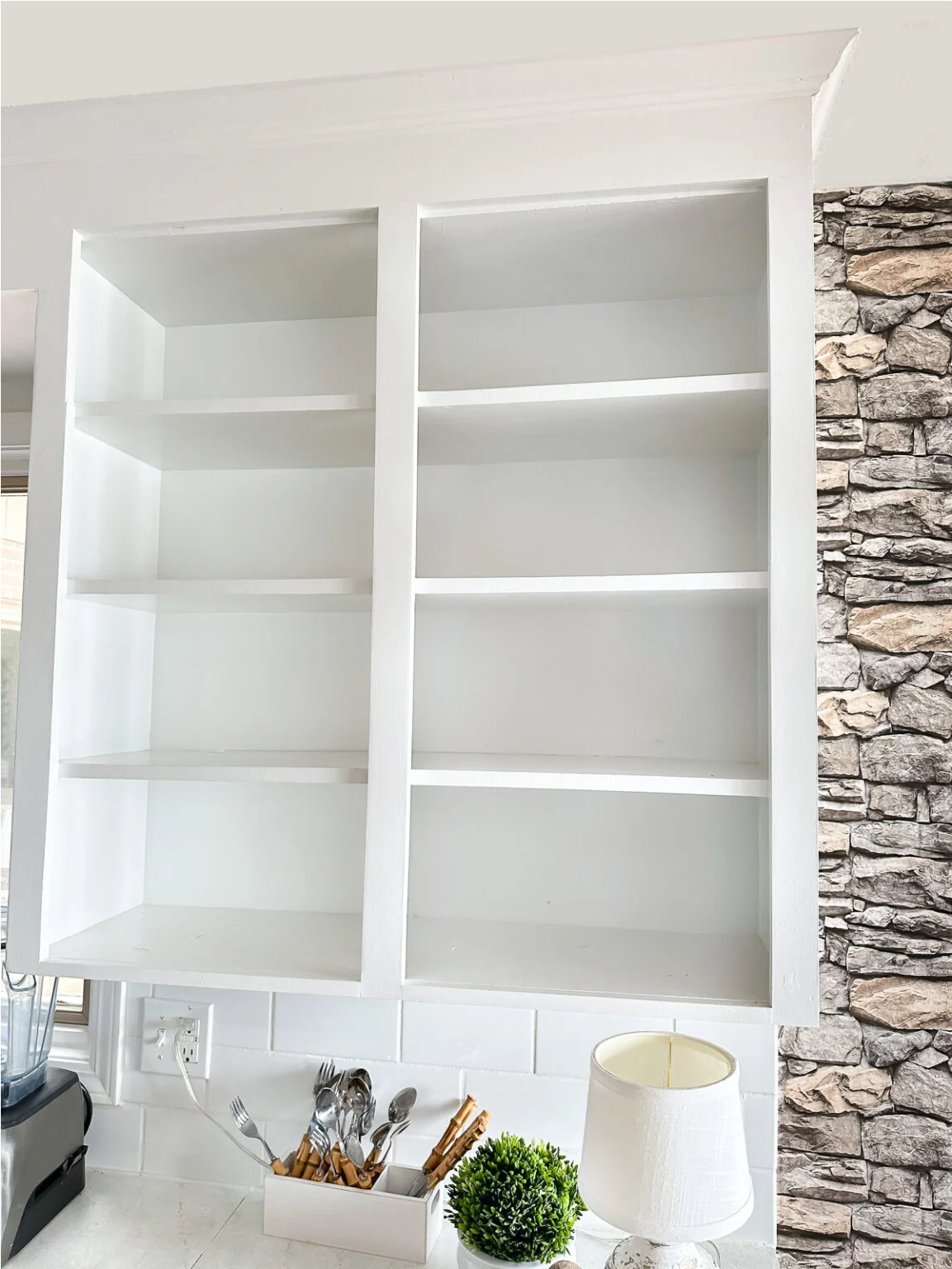
My kitchen is small, so small that your elbow will bump into the refrigerator door when you turn around. This means the countertop must be kept almost imperceptibly clean—any extra decorations will instantly make the space feel suffocating. So every year when the seasons change, I only do one thing: rearrange those two sets of open shelves.
They weren’t originally there. A few years ago, when I renovated the kitchen, I removed the two obstructive cabinet doors above the peninsula countertop—they always bumped into the countertop when opening, making them very cramped. After removing the doors, the walls suddenly felt breathable. I’ve never regretted this decision.
II. This Year’s Theme: Dark Colors and Warmth
In previous autumns, I tended towards bright and refreshing color schemes. This year, I wanted to try something different.
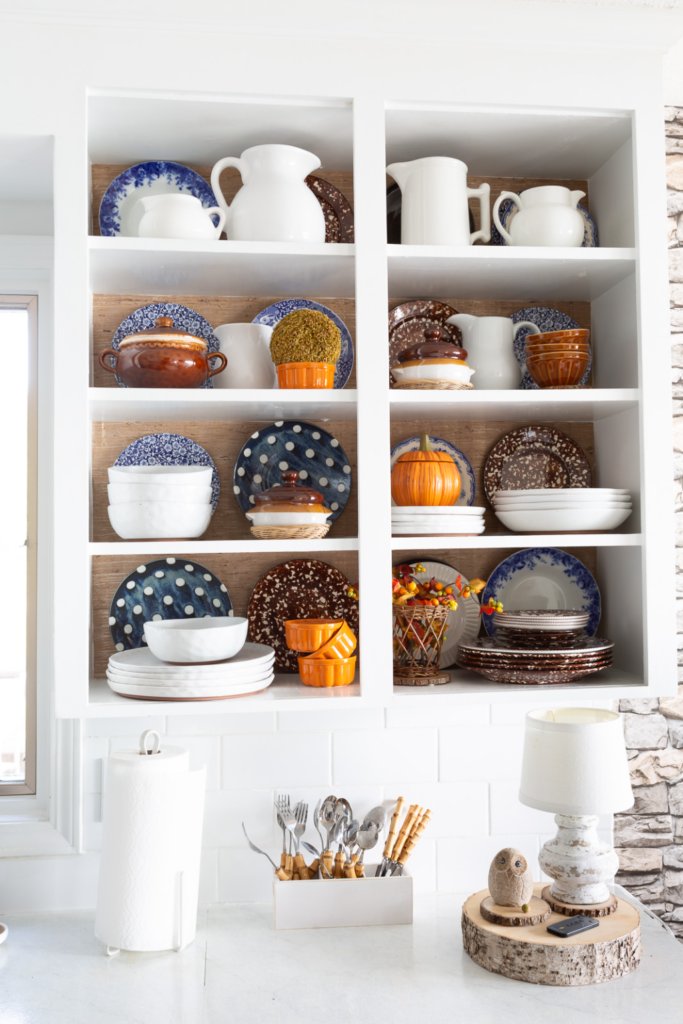
I found a few scraps of dark brown straw wallpaper in the pantry, which I bought for six dollars at a flea market a few years ago. At the time, I just thought the texture was nice and hadn’t decided where to use it; now they’ve finally found their home. The rough texture of the woven straw against the shelf backboard is like a warm layer of bark lining the white shelves.
I’ve used this wallpaper before—as a cardboard backing for the living room photo wall and as a summer screen for the fireplace. Now, looking from the living room to the kitchen, both rooms share a common brown tone, and the line of sight doesn’t abruptly break when passing through the doorway.
III. Blue and Brown: An Underrated Combination
Someone asked me if a blue plate against a brown background would be too somber.
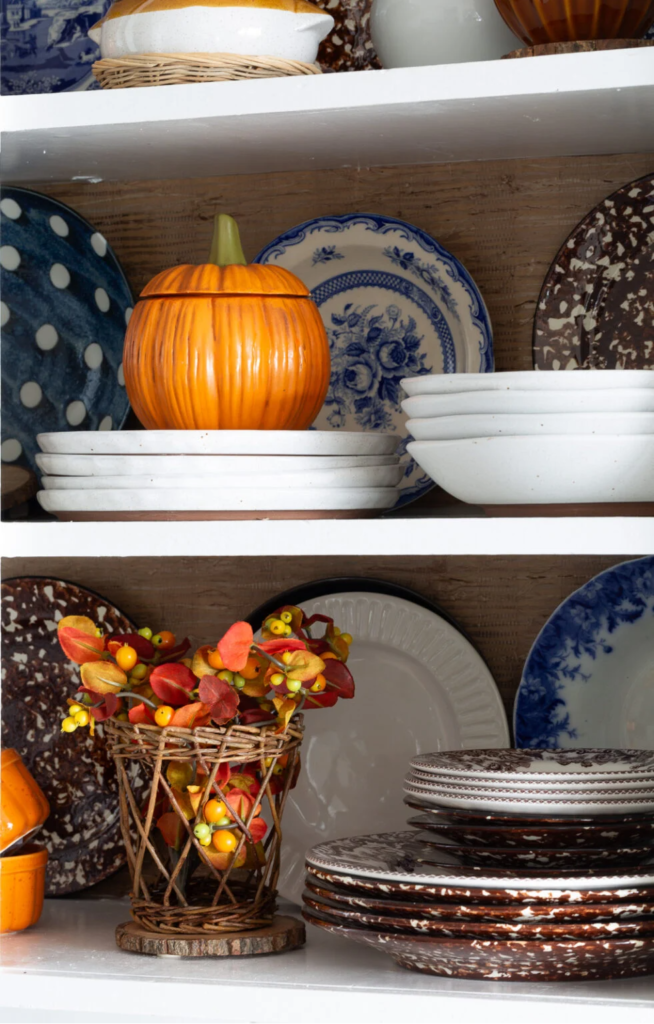
Just look at the color wheel. Blue and brown (or rather, the complementary relationship between blue and orange-brown) are naturally complementary colors, creating a calm tension when placed together. Dark blue is like twilight, brown like earth; together, they perfectly capture the texture of light in an autumn evening.
I chose navy, pumpkin orange, and ginger yellow as the main colors for this year. Three towels hang on a rod on the side of the island—orange embroidered with oak leaves, dark blue with subtle maple leaf patterns, and the ginger yellow one with the same jacquard texture. They don’t make a fuss; they quietly announce the season.
IV. Display Lessons on Shelves
When arranging shelves, I follow one principle: use only what you already have, and don’t buy special seasonal decorations.
A blue and white printed plate leans against the back panel, with stacks of white plates in front of it; an orange ceramic jar shaped like a pumpkin sits atop the plate pile, its lid can be lifted to reveal a sugar container. A few artificial autumn leaves, a mix of red and yellow, are arranged in a wicker basket, resting on a round wooden block. Dark brown enamel plates alternate with navy blue polka-dot plates, like a scrambled color palette.
White kettles and bowls are regulars, brightening the dark background and preventing it from feeling suffocating. The overall effect is rich yet uncluttered—everything has a practical purpose, not just decoration.
V. Wallpaper Back Panel Installation Notes
If you also want to add a back panel to your shelves or bookshelves, it’s simpler than you think. An hour or two is enough, depending on how many layers you want to apply.
What you’ll need:
- Wallpaper scraps
- Sharp scissors or utility knife
- T-square or measuring tape
- Pencil
- Measuring tape
- Double-sided tape (strong red), transparent tape, masking tape, or removable adhesive dots
Steps:
First, draw a rough sketch of the shelf on paper and label it with numbers. Then, measure the width and height of each shelf’s back panel—note that shelves that appear to be the same height may have slight differences in actual dimensions, so each must be measured individually. Record the measurements on the sketch from top to bottom.
Cut the wallpaper to the required dimensions and label the corresponding shelf number on the back. Secure the four sides with double-sided tape when applying the wallpaper; no glue is needed, and it can be easily removed if you want to change it later. Straw-woven wallpaper has a certain thickness, which can cover minor imperfections on the back panel. Use a sharp knife when cutting to avoid rough edges.
VI. Some Thoughts
The advantage of open shelves is that they force you to tidy up regularly. Without the doors to conceal it, everything is exposed, which ironically becomes a form of self-discipline.
Every autumn, rearranging the plates, changing the wallpaper backing, and hanging a few seasonal towels—these small actions don’t require a large budget, yet they keep the kitchen feeling fresh for three months. The changing of seasons is usually silent, but people always need some concrete rituals to acknowledge its arrival.
My ritual is standing in front of those two sets of shelves, moving the blue plate an inch to the left, so that the shadow of the pumpkin jar falls precisely on the woven grass texture.