
I. The Problem
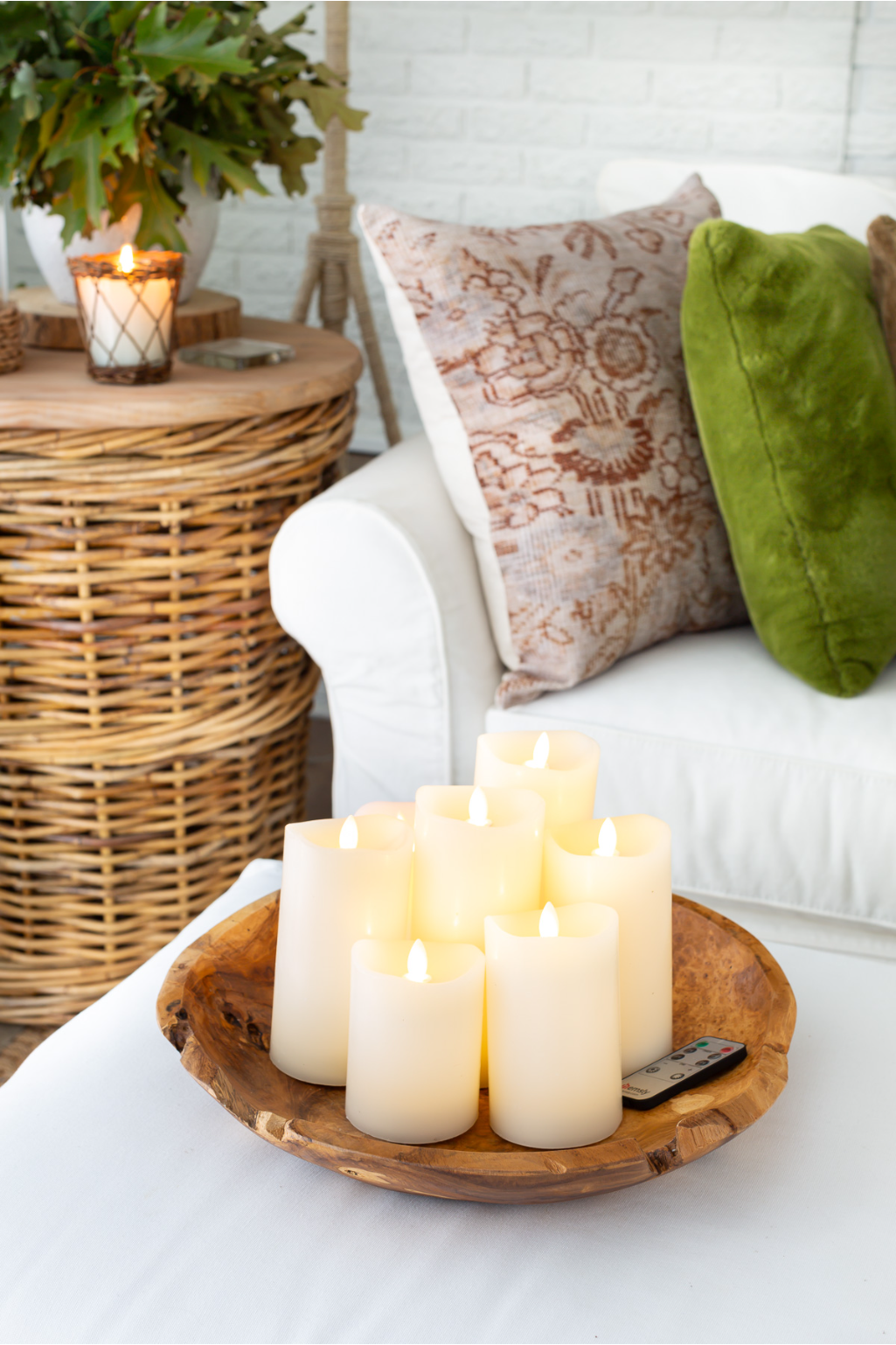
Last autumn, I bought two Pottery Barn throw pillowcases for my living room. The creamy base with brown and rust-red patterns felt warm and inviting at the time, complementing the beige sofa and green velvet pillows perfectly. A year later, when I took them out of storage, my eyes rejected them—the color was too light, the feel too warm, clashing with the deep, melancholic yet cheerful autumn atmosphere I wanted this year.
Throw them away? They were expensive, and the fabric itself was intact. Keep them? I frowned slightly every time I passed the sofa. This was a classic “sunk cost” dilemma, but also a perfect opportunity for a makeover experiment.
I decided: to dye them blue.
II. Preliminary Research
I had never dyed anything before. Could tapestry-style brocade and coarse woven fabric absorb the dye evenly? I was unsure.
After spending two nights researching “fabric dyeing,” I gradually built up my confidence. Rit All-Purpose Dye is the most popular household dye on the market, with a product line covering both liquid and powder forms, and a dazzling array of colors. Even better, they offer a custom color chart—if the blue you need isn’t on the shelf, you can mix it according to the formula to create your target color.
Synthetic fibers require a different approach. Rit DyeMore is specifically designed for polyester, acrylic, acetate, and their blends. Its working principle differs from natural fibers, so it cannot be mixed with them.
III. Method Selection
Depending on the size of the item and the desired effect, there are three operating methods:
Tank/Bucket/Plastic Basin Method. Suitable for general projects. Pour in extremely hot or boiling water, add the dye, and immerse the item. I chose a large plastic storage box, large enough to hold two pillowcases unfolded simultaneously.
Stove Method. Used when pursuing the most vibrant saturation; the amount of dye needs to be doubled. Find the largest pot you have at home and boil the dye bath. This method is especially effective for nylon.
Washing Machine Method. The least labor-intensive, suitable for large items—sheets, curtains, and bulk clothing. The machine does the heavy work of stirring and soaking for you.
I chose the first method. Two pillowcases aren’t large, the plastic basin method is highly controllable, and it doesn’t require using a kitchen stove.
IV. Experimental Materials
- Rit All-Purpose Dye (liquid), color Denim Blue
- Rit ColorStay Dye Fixative
- Large plastic storage box
- Rubber gloves
- Long-handled clips
- One cup of salt
- One teaspoon of dish soap
The roles of salt and dish soap cannot be ignored. Salt helps the dye penetrate the fibers evenly, and dish soap reduces the surface tension of water, allowing dye molecules to come into more full contact with the fabric. This is key to preventing color spots and patches.
V. Operating Procedures
Step 1: Pretreatment Step 1: Rinse the pillowcases with clean water to remove any residual finishing agents and ensure the fibers are in an “open” state.
Step 2: Prepare the dye bath. Pour hot water (approximately 60 degrees Celsius) into a plastic container—hot but tolerable. Add a whole bottle of Denim Blue, salt, and dish soap, and stir until completely dissolved. The water will turn a deep, rich indigo, like a pool of solidified twilight.
Step 3: Immersion and stirring. Wearing rubber gloves, immerse both pillowcases simultaneously. Use long-handled tongs to constantly turn them, ensuring every inch of fabric has ample contact with the dye. The first five minutes are crucial, as the dye adheres to the fibers most rapidly; uneven stirring can lead to permanent color differences.
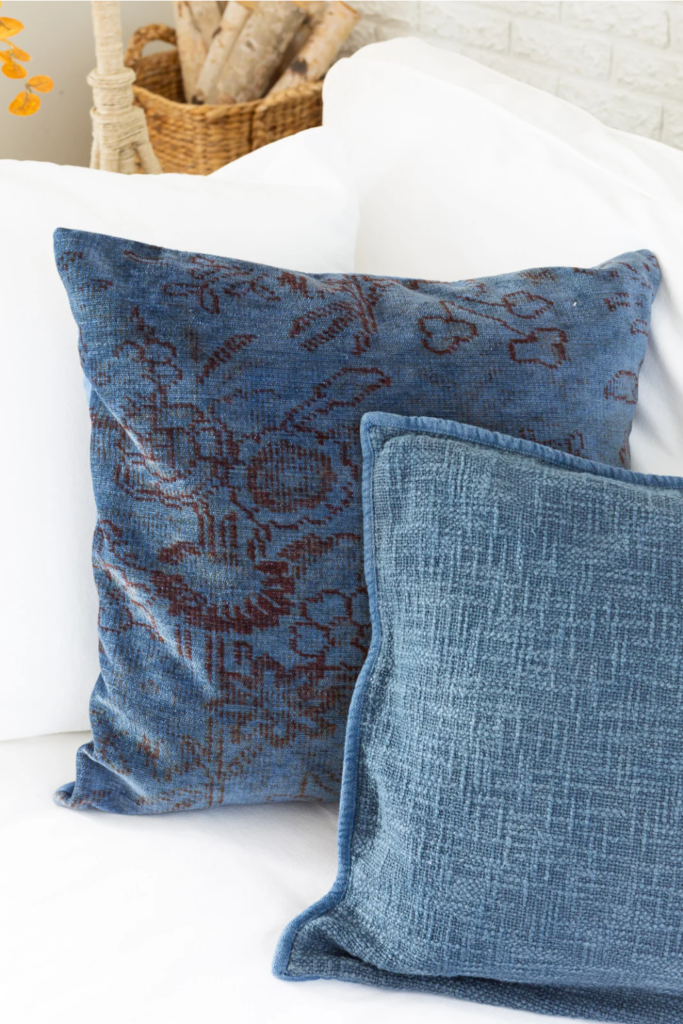
Step 4: Observe the depth. After about thirty minutes, the color reaches the desired depth—not navy blue, but a grayish denim blue, creating an interesting overlay effect with the original brownish-brown pattern of the brocade.
Step 5: Color fixing treatment. Drain the dye bath, refill with warm water, and add ColorStay Dye Fixative. Soak the pillowcases again for twenty minutes. This step is a safety measure, locking in the dye molecules and reducing fading and bleeding during future washes.
Step Six: Washing and Drying. Machine wash once with warm water and mild detergent to remove loose dye. Hang to air dry, avoiding uneven coloring caused by the high temperature of the dryer. Once completely dry, iron with a medium-temperature iron to smooth out wrinkles and put the pillowcases back on.
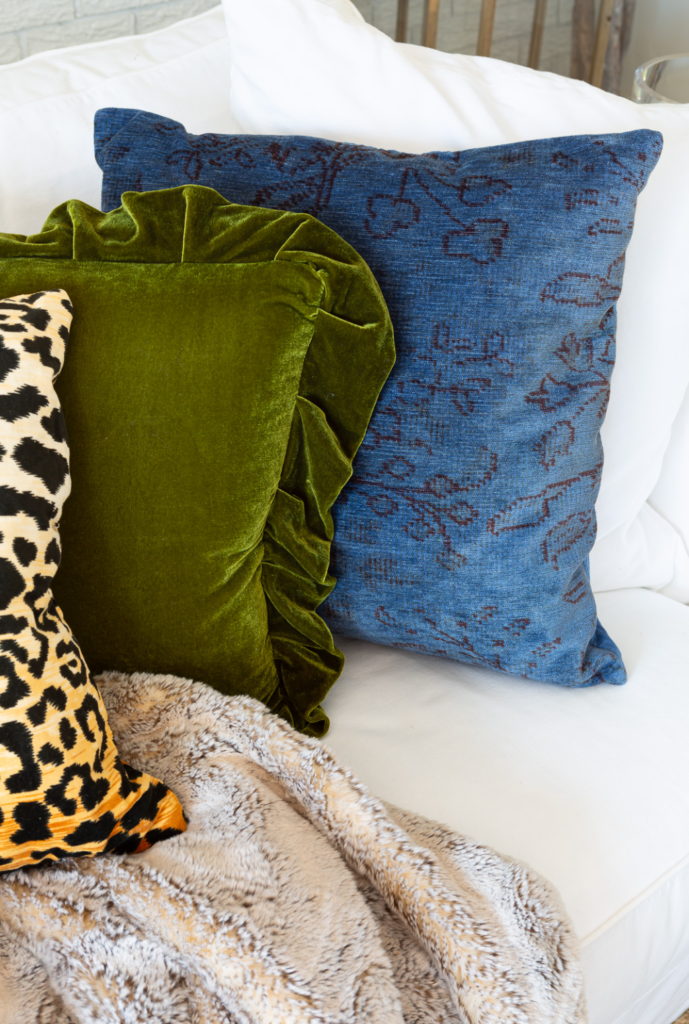
The result was satisfactory. The original creamy base color turned into a serene blue, with subtle brown patterns peeking through, like contour lines on an old map. The two pillows now perfectly match the tone of this autumn’s living room.
VI. Unexpected Discoveries and Lessons Learned
After the successful experiment, I struck while the iron was hot and dyed a spare white cotton dress cocoa brown. The overall effect was acceptable, but an unexpected detail emerged: the seams and buttonholes of the skirt remained white.
The label confirmed the fabric was 100% cotton, but the stitching was clearly a polyester blend—which refuses to absorb the dye from All-Purpose Dye. This created an unexpected decorative effect: the white stitching resembled hand-painted outlines, and several friends even praised its “design sense.”
The lesson learned is: always check the materials of all components before dyeing. If you’re concerned about color differences, do a small sample test in an inconspicuous area first. If the result is unsatisfactory, Rit provides a color remover for a reversal; you can also re-dye to deepen the color.
VII. Expandable Application Scenarios
A bottle of dye costing just a few dollars can transform more than just pillowcases. Curtains, towels, napkins, T-shirts, canvas shoes—any fabric primarily made of natural fibers is a potential candidate for transformation.
Synthetic fiber clothing requires the DyeMore formula. It’s widely available: Amazon has the most colors, and it’s also sold at Hobby Lobby, Walmart, Target, and most grocery stores, but physical stores often have limited color options.
This small incident illustrates a principle: the “obsolescence” of an item is often not physical, but rather a matter of color. Changing the color is equivalent to changing the overall feel, and the cost is far lower than buying a new one.
Two blue throw pillows now lie on the sofa, side by side with a green velvet pillow. Once a cream color rejected by the eye, they are now among the most eye-catching items in the room. This transformation requires no new budget, only a little hot water, a bottle of dye, and the willingness to experiment.