

I. Two Types of Chairs, Two Types of Life
Throughout life, the chairs we sit on can generally be divided into two categories: those we “sit on,” and those we “sit within.”
Dining chairs belong to the former. They are upright, restrained, and dignified, suitable for maintaining a civilized tension while eating. But when you want to finish reading a thick book, watch a movie, or elevate your legs after a long day—these chairs immediately reveal their cruelty. They never invite you to sink in, only demand that you sit upright.
The latter is different. Those chairs with thick cushions, generous backs, and the ability to allow you to sink in completely are the true heart of the home. I’m referring to recliners, or any armchair that allows you to “sit in” rather than “sit on.” They may not conform to the aesthetic standards of some design magazines, but they understand human fatigue.
II. Between House and Home
I have always distinguished between the words “house” and “home.” A house is about walls, floors, load-bearing beams; a home is about shelter, relaxation, and a sense of belonging. Even the most luxurious hotel suite in the world cannot replicate the feeling of home, because hotels require you to maintain decorum, while home allows you to disintegrate.
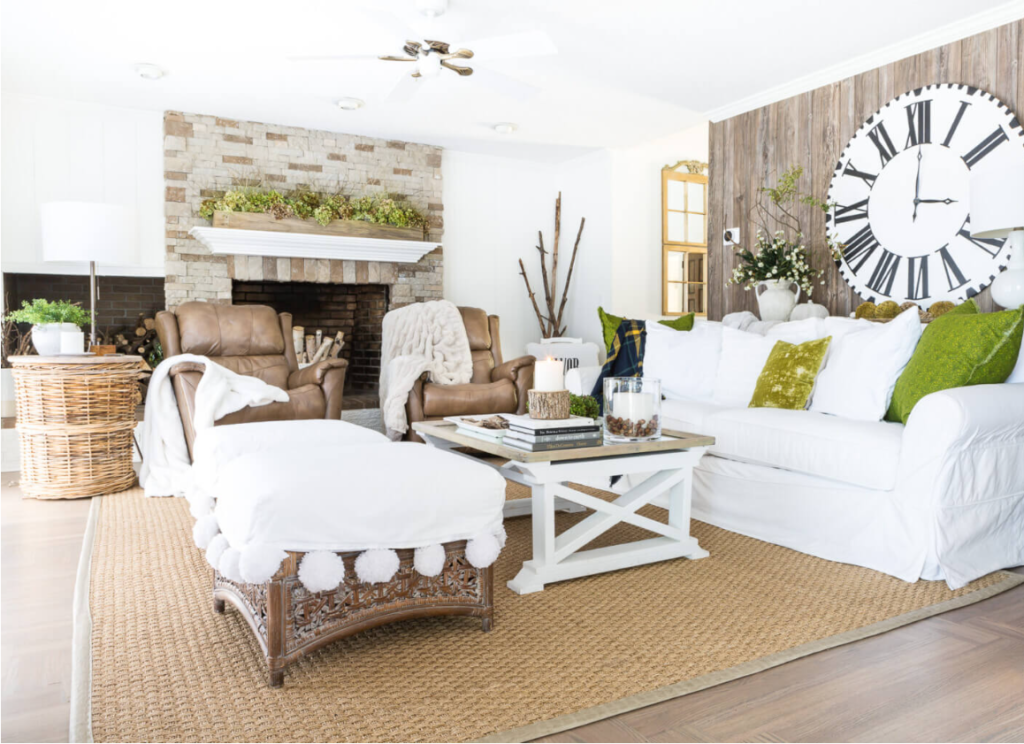
In my living room sit two chaise lounges, Southern Motion, model Shimmer, with leather in a shade called Toast—a perfectly warm brown. They can rock, swivel, and recline, facing the fireplace, the room’s visual anchor. When watching a movie, they lean forward, making you feel like you’re in a theater; when you want to read, they swivel to face the firelight; if you’re just daydreaming, they face the floor-to-ceiling windows, bringing the shimmering lake surface before your eyes.
A stationary chair cannot do all this. You’ll constantly get up, drag, and adjust the angle, as if negotiating with the furniture. A chaise lounge solves all these problems at once: it obeys your needs, rather than demanding that you adapt to its stubbornness.
III. On the Defense of “Imperfection”
There’s a myth in the decorating world that beauty and comfort are mutually exclusive. Some interior designers are obsessed with visual effects, arranging chairs like display pieces, yet sitting on them feels like being punished. They forget—or deliberately ignore—that a home is first and foremost a place to live, and only secondly a place to look at.
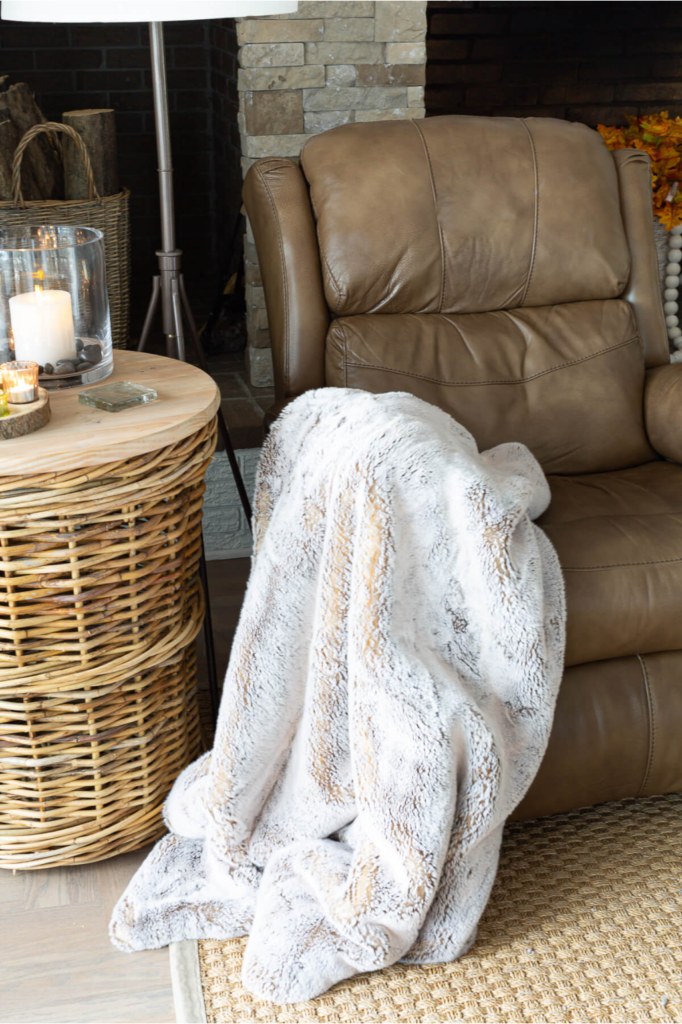
My recliner never strives for the perfection seen in photographs. The leather bears the marks of use, the blankets beside the armrests are always draped casually, and the floor lamp in the corner is dimly lit. These “imperfections” are precisely the personality of the room. A beautiful chair that no one dares to sit in is nothing more than an arrogant piece of furniture in the room.
A few years ago, I sent an old sofa to my eldest daughter and then waited eight weeks for the new recliner to arrive. During those eight weeks, I brought in two outdoor rattan rocking chairs as a makeshift solution. They were pretty, but stiff as if they were standing guard. I sat “on top,” not “inside,” experiencing back pain when reading and neck stiffness when watching TV. That was the first time I realized so clearly: without comfortable seating, a house degenerates into a warehouse.
IV. Honesty with Your Body Before Buying
If you’re planning to buy a recliner, there’s an ironclad rule: you must sit in it yourself before purchasing. Other people’s opinions are meaningless—height, weight, leg length, lumbar curvature—everyone’s geometry is different, and what suits someone else may not suit you.
My husband and I visited the La-Z-Boy showroom twice, a mecca for recliners. We tried all the models, but none of them simultaneously satisfied both of our bodies. Finally, we found the Shimmer in a corner of a local furniture store—it’s neither oversized nor does it have fancy features like heating or massage; it’s just a clean chair that can rock, swivel, and recline.
When buying, please check these details one by one: Does it fit your back when sitting upright? Does the headrest force your chin to touch your chest when reclined? When the footstool is extended, will the gap between your calves and the seat cause discomfort to your calves? In the upright position, can your toes touch the ground? Does the armrest height allow your shoulders to relax rather than hunch? Should the seat depth match your thigh length? Too short and you’ll feel unsupported; too long and you’ll slouch.
Electrically adjustable models allow for separate seat and headrest adjustments, but consider the power cord location and the harsh reality: electronic components often have a much shorter lifespan than the chair itself.
V. The Geography of Placement
Recliners take up more space than regular armchairs. When fully reclined, with the backrest tilted back and the footstool extended forward, you’ll need 10 to 14 inches of clearance around it. Avoid having the headrest hit the wall or the footstool tip over the coffee table.
Visual balance is also crucial. A recliner’s large size can make one side of the room feel too heavy. The solution is to place another substantial piece of furniture opposite it—a large bookshelf, a wide low cabinet, or another chair of similar size—creating a symmetrical pull at both ends of the space.
The rug should be large enough to encompass both the recliner and the adjacent side table within the boundary. The choice of side table is also important: it shouldn’t be too small, otherwise the proportions will be off; the base must be stable, as the recliner might rub against it when it rotates. The coffee table should ideally be placed away from the front of the recliner, leaving enough space for the footstool to unfold.
VI. The Rhetoric of Accessories
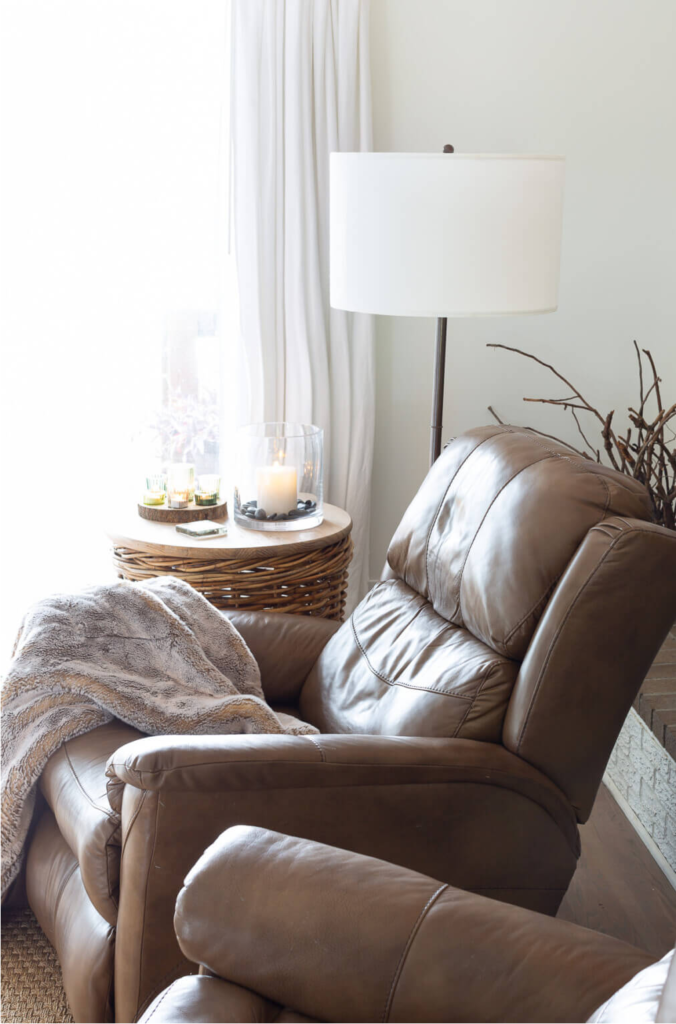
A thick blanket draped over the back or armrest is the most honest decoration for a recliner. It declares: this chair welcomes use, welcomes curling up. Choose faux fur or velvet in winter, and switch to lightweight linen or cotton in summer.
A recliner itself usually doesn’t need cushions—the seat cushion is already ample enough. But when no one is using it, placing a decorative pillow diagonally at one corner of the chair can make the chair look less “functional,” giving it a more “designed” appearance. When in use, toss the pillow into the basket next to it, sit down, recline, and get into position.
VII. For Those Still with Doubts
If you truly cannot accept the appearance of a traditional chaise longue, there are other imposters on the market: sofas or armchairs with hidden pull rods on the inside of the armrests that recline easily, appearing indistinguishable from ordinary upholstered furniture. I used to have one in my home, and even visiting friends didn’t notice.
Alternatively, you can add a footstool in front of your existing armchair. It serves as a seat during the day and supports your feet when needed, offering greater flexibility. Or, a sectional with a chaise lounge allows the whole family to stretch out simultaneously.
My only regret is not letting go of my prejudice against chaise longues sooner. For years, I kept them hidden in unseen rooms, as if comfort was a weakness that needed to be concealed. Now they sit openly in the center of the living room, facing the fireplace, facing the lake, facing everyone who enters the home.
Comfort is not the enemy of design. Ignoring comfort is.