
I. A New Breath for an Old House
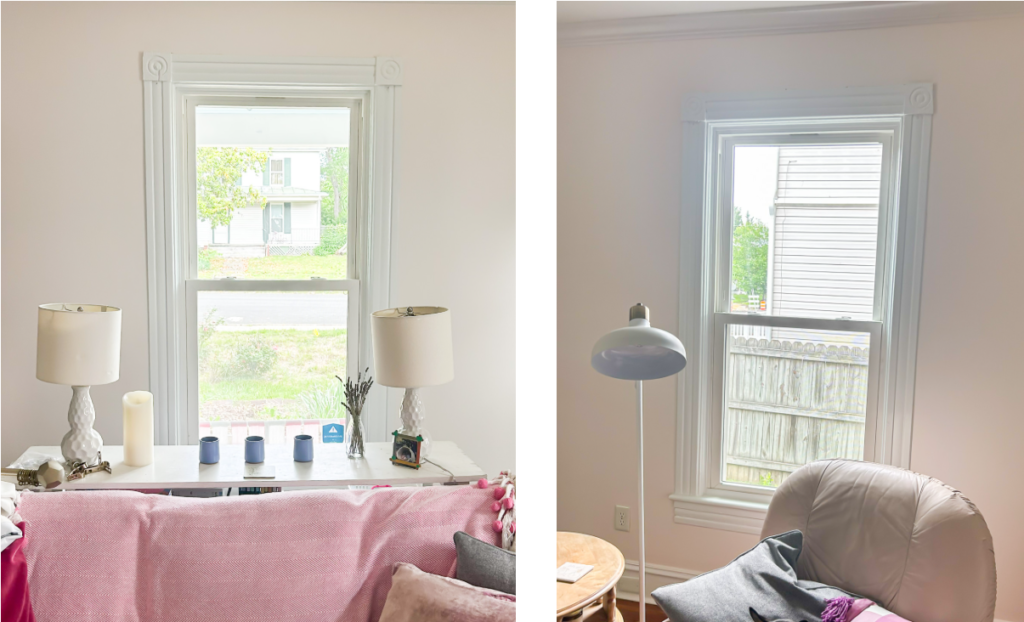
My daughter Mandy and husband Matt bought an old house in Virginia. Ed and I drove north to help them paint the foyer, living room, and dining room. After the paint was finished, the walls were clean, but the windows were still bare—two single windows in the living room, framed with high-gloss white decorative trim, and delicate rose decorations at the four corners of the lintel. These details shouldn’t be covered up, but the windows couldn’t remain empty forever.
The windows of an old house are like eyes. Without curtains, it’s like someone with open eyes who doesn’t blink—it’s unsettling.
II. Four Considerations When Choosing Curtains
I listed a few principles for Mandy and Matt. Not dogma, but the hard-earned lessons learned from years of hanging the wrong curtains.
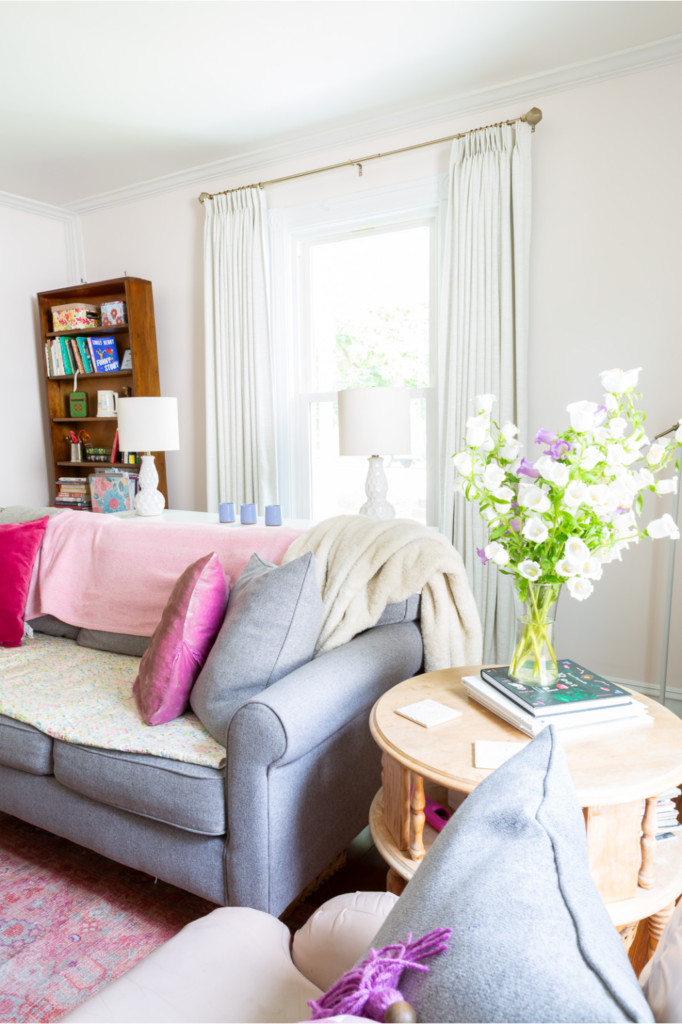
Hang high, hang wide. This trick is especially useful for small windows. Position the rod near the ceiling, and when the curtains are pulled open to the sides, they are further away from the glass, visually pushing the window frame further away. The ceilings appeared higher, the windows larger, giving the room a sense of generosity it didn’t originally possess.
Don’t cover the decorative molding. The rose trim at the corners is the house’s character, a signature left by the previous owner. The curtains should complement it, not swallow it.
Effective blackout. They need to watch TV during the day, meaning the lining must be blackout level. The white-grey blackout lining, hidden behind the white curtains, is invisible during the day but blocks out streetlights and moonlight when the curtains are closed at night.
Allow ample light. When the curtains are pushed to the sides, the glass should be exposed as much as possible. Old houses need natural light, otherwise gloom will creep up the walls.
III. The Art of Pleats
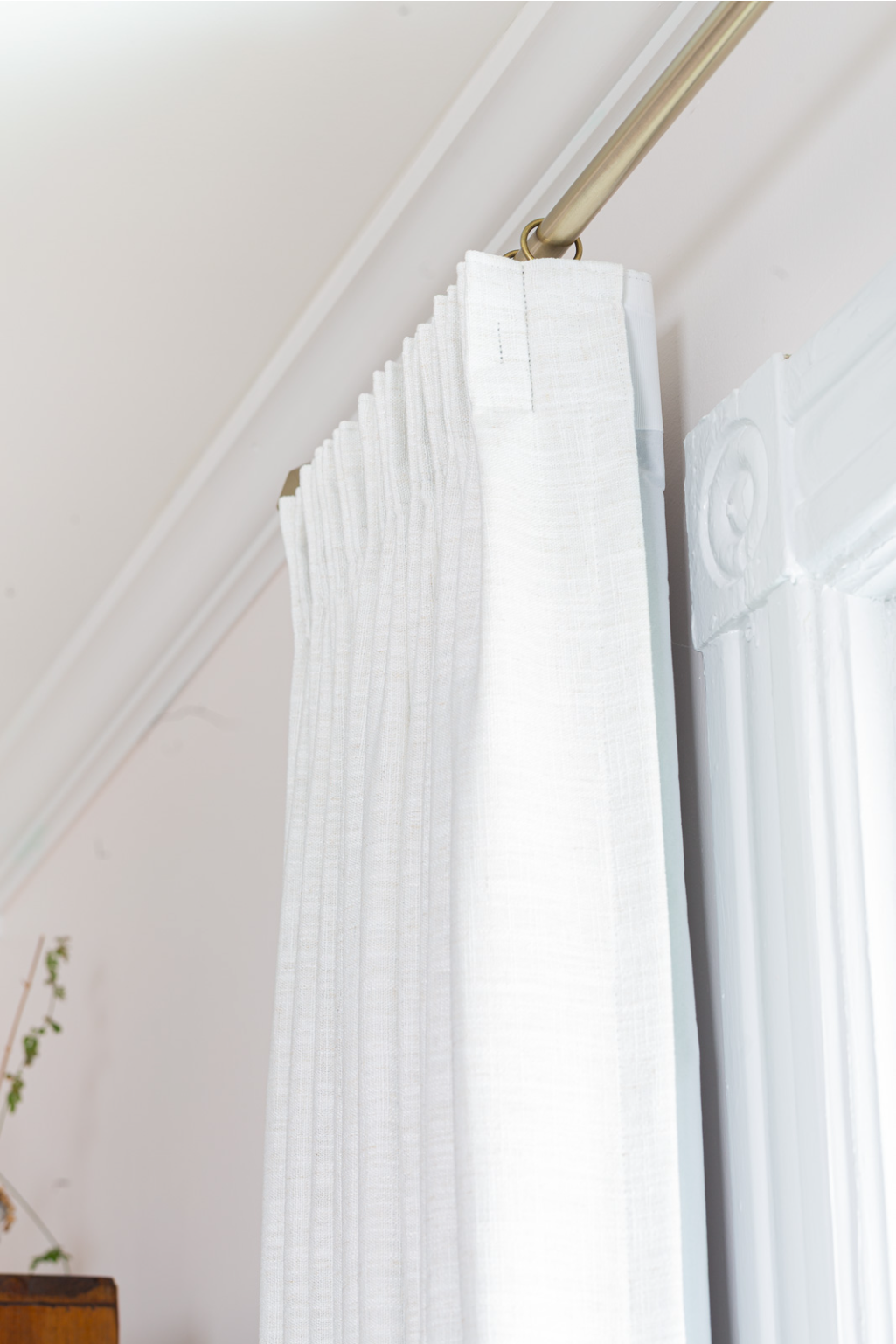
They ultimately chose TWOPAGES pleated curtains. I knew nothing about the brand at first, but after receiving the actual product, the evenness of the pleats convinced me—the width, depth, and drape of each pleat seemed measured by the same hand.
The accessories are another layer of attention to detail. The included hooks are adjustable in length; after inserting into the pleats, they are then hung on the rod rings. Matt first hung the entire curtain on the rod, stood at a distance to observe the effect, and determined the precise height of the bracket before drilling holes in the wall. This “hang first, then fix” method avoids a common mistake in countless homes: the bracket is installed too low, leaving the top of the curtain a gap from the ceiling, thus interrupting the flow of the entire wall.
The hooks themselves also deserve a mention. They are not cheap plastic pieces, but substantial metal pieces that slide with slight resistance when inserted into the pleats, yet remain rock-solid once in place. This attention to detail determines whether the curtains will retain their current shape five years later.
IV. An Overlooked Technique
After installation, I reminded them to do one thing: add an extra hanging ring to the outermost part of the rod bracket, concentrating all the remaining inner hanging rings inside the bracket.
Many people overlook this step, resulting in curtains always being pulled straight to the center of the window, with the bracket exposed, looking like an unhealed wound from the side. Adding that outer hanging ring secures the curtain outside the bracket, concealing the bracket itself in the shadow of the folds, thus creating a clean and complete line for the entire wall.
V. Honesty About Fabrics
TWOPAGES offers fabric swatches, which is wise. There’s an insurmountable gap between white on a screen and white in real life. Samples allow you to feel the weight of the fabric, see its different expressions under natural and artificial light, and smell the unique washed scent of new fabric.
Mandy chose a warm white, not a cool white, nor ivory—a tone that perfectly complements the walls of the old house. The blackout lining is light gray from the back, but completely opaque from the front, like a silent armor.
VI. Epilogue and Aftermath
The two windows in the living room now have clothes. During the day, with the curtains drawn on either side, light streams in, casting dappled shadows on the wall from the rose decorations; at night, the curtains close, plunging the room into a controlled darkness, making the television screen even clearer.
Watching Mandy and Matt adjust the pleats by the window, I suddenly realized: curtains are never just about blocking out light. They are the expression of a wall, the attitude of a room, a silent declaration of “how to live.”
I had an idea: I wanted to get Roman blinds for my bedroom too. Old houses always teach more than new ones.